Courchevel was the first ski resort in France built from nothing — no old village to adapt, no church square to plan around. In 1946 the Savoie regional council chose an empty, north-east-facing plateau above Saint-Bon-Tarentaise and gave a young planner, Laurent Chappis, one brief: design everything around the skiing. Eighty years later that blueprint still decides where the Palace hotels stand and why you can ski to almost any door.
Most Alpine resorts grew out of farming villages that later bolted on ski lifts. Courchevel was drawn on a blank plateau — the first French resort planned from scratch as a ski machine, and the model for the purpose-built resorts that spread across the Alps afterwards. Here is how it was built, decade by decade, and how much of the 1946 plan you still ski through today.
The 1946 decision — a resort designed around skiing
The idea came before the lifts. A wartime study in 1942 and the doctoral work of the town planner Laurent Chappis had already imagined a resort built for snow rather than adapted to it. In 1946 the Conseil Général de la Savoie — the regional council — resolved to build one, both to open skiing beyond the wealthy few and to give the Tarentaise valley an economic future. Chappis, working with the engineer Maurice Michaud, spent a winter traversing the slopes on skis, mapping gradients, sun and prevailing wind. What he drew was radical for its day: a star of pistes converging on a central forum, every building turned to the sun, every street falling toward a lift, and no hotel more than a short slope from the snow. He called the principle ski aux pieds — skis on at the door — and it still governs the village.
Courchevel, decade by decade
Eight decades separate the first rope tows from today's Palace plateau. The milestones that matter:
| Year | Milestone |
|---|---|
| 1942 | Wartime planning study; Chappis drafts the blueprint for a purpose-built resort |
| 1946 | The Conseil Général de la Savoie decides to build Courchevel from scratch |
| 1947 | The first ski lifts open on the 1850 plateau |
| 1949 | Denys Pradelle's Joliot-Curie chalet — an early template for the modern mountain house |
| 1961 | Michel Ziegler builds the Altiport for his Air Alpes airline; first landing January 1962 |
| 1992 | Les Airelles opens and the Palace era begins |
| 2006 | Cheval Blanc opens; its restaurant Le 1947 will go on to hold three Michelin stars |
| 2013 | L'Apogée completes the modern cluster of Palace hotels |
From one plateau to the largest ski area on earth
The plateau was only the seed. The downhill champion Émile Allais was brought in to shape and groom the runs, pioneering the machine-prepared piste damée that resorts everywhere later copied. Lifts pushed up to the Saulire and out along the ridges, and by the 1970s Courchevel had linked with the neighbouring valleys of Méribel and the Belleville to form Les Trois Vallées — today around 600 kilometres of connected pistes, the largest linked ski area in the world. Every metre of it traces back to the star of runs Chappis first drew on skis in 1946.
Why it is called 1850 — the four altitudes
Courchevel was built as four villages stacked by height and named, bluntly, for their altitude in metres: 1300 (Le Praz), 1550, 1650 (Moriond) and 1850, all inside the commune of Saint-Bon-Tarentaise. The numbers started as planning shorthand and never left; only 1650 has taken back a village name, Moriond, and mostly for marketing. Locals still answer the phone with the figure. The 1850 plateau was chosen for two reasons that still matter to skiers: it holds snow reliably from December to April, and — unusually for the Alps — it faces north-east, so its pistes keep their cover instead of softening to slush by lunchtime.
The architectural code — and how it bent
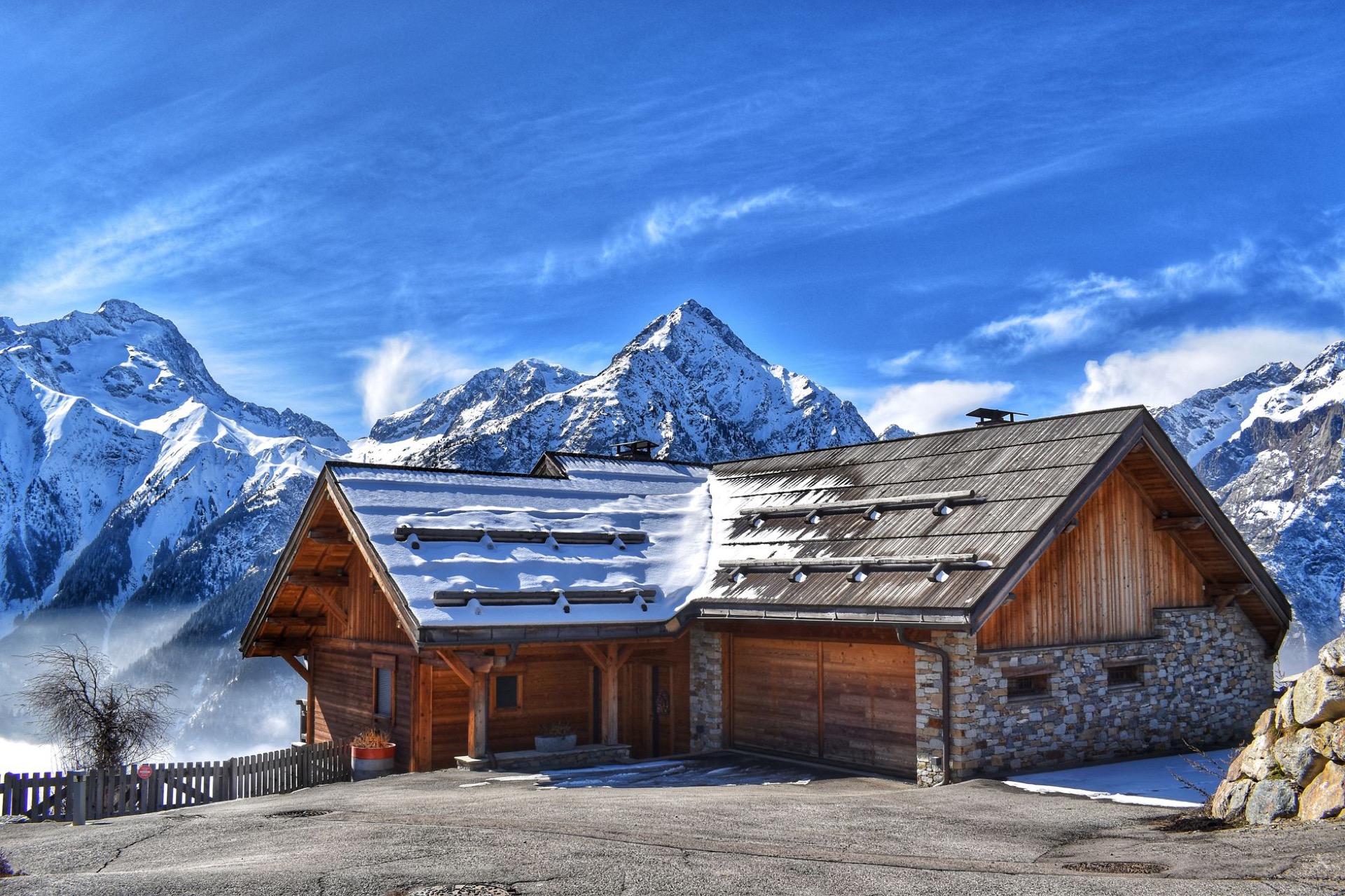
Chappis and the architects of the Atelier d'Architecture en Montagne, among them Denys Pradelle, set a code: a stone base, larch cladding above, low roofs built to shed snow. It held for roughly two decades. Then money arrived. From the late 1960s the discipline loosened — larger builds around the Croisette, a drift toward Tyrolean pastiche — and from the 1990s the Palace era rewrote the top of the plateau. Les Airelles came first, then Cheval Blanc, then L'Apogée, each pairing a Michelin kitchen with a spa and reshaping the après-ski day. Today Courchevel carries more hotels with France's official “Palace” distinction than any other ski resort in the country — a label the state reserves for only a handful of properties nationwide.
What survived from the 1946 plan
Three things outlasted everything built since. The piste network, still drawn around the Saulire and Pralong as Chappis intended. The Altiport — a short, steeply sloping runway at roughly 2,000 metres that put the resort within a light-aircraft hop of the cities and that pilots still train specially to land on. And the founding rule: a building is judged on whether you can ski to its door. It is why the Palaces line the Jardin Alpin and Bellecôte, why the village has no grand central square, and why — eighty years on — Courchevel 1850 still reads as a piece of engineering as much as a place to stay.
Read on
Compare the four levels in our guide to the villages of Courchevel and 1850 versus 1650; follow Chappis's pistes across the Trois Vallées; or begin with the trip planner.